
Medical Equipment Supplier in Central African Republic: Essential Hospital and Emergency Care Equipment Guide
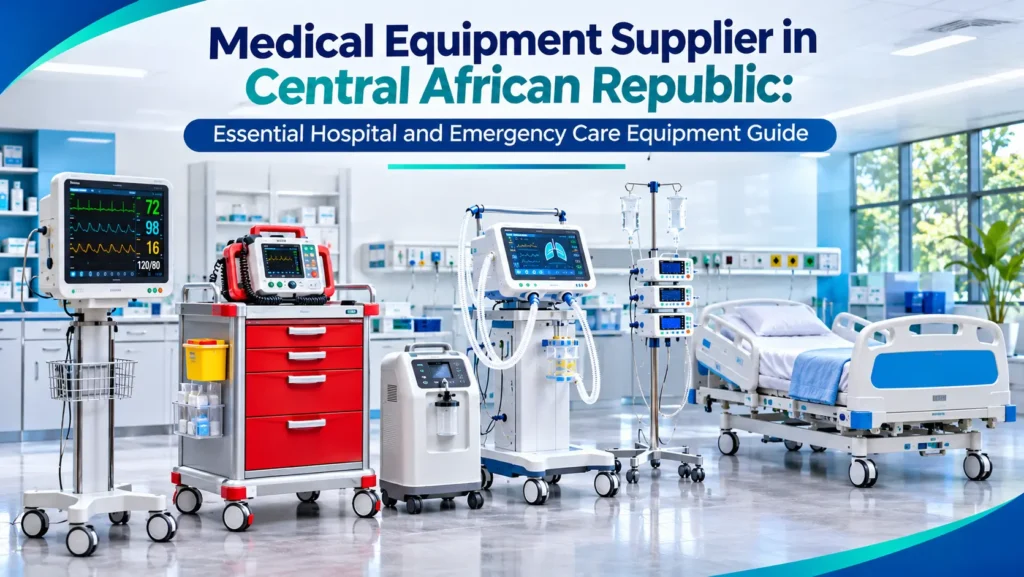
Reliable medical equipment is essential for hospitals, clinics, diagnostic laboratories, and healthcare organizations delivering medical services in the Central African Republic (CAR). From emergency treatment and patient monitoring to laboratory testing and surgical procedures, healthcare facilities require appropriate medical technologies to support safe and effective clinical operations.
For healthcare organizations searching for a medical equipment supplier in Central African Republic, selecting suitable equipment and an experienced international sourcing partner is an important part of successful procurement.
MEDIGATEMED MEDICAL EQUIPMENT TRADING LLC, based in Dubai, United Arab Emirates, provides medical equipment sourcing solutions for hospitals, clinics, healthcare distributors, NGOs, and medical projects across African markets.
This guide explores essential medical equipment categories, procurement priorities, and practical considerations for healthcare organizations planning to purchase medical equipment for facilities in the Central African Republic.
Medical Equipment Requirements for Healthcare Facilities in the Central African Republic
Healthcare facilities have different equipment requirements depending on the services they provide, their patient capacity, and available infrastructure.
Hospitals, clinics, medical laboratories, and healthcare projects in Bangui, Bimbo, Berbérati, Bambari, and other locations may require equipment for:
- Emergency and trauma care
- General medical examinations
- Intensive care and patient monitoring
- Laboratory diagnostics
- Maternity and neonatal services
- Surgical procedures
- Infection prevention and sterilization
- General patient care
When preparing an equipment procurement plan, healthcare administrators should evaluate clinical requirements, technical specifications, available infrastructure, and long-term maintenance needs.
Essential Emergency and Trauma Care Equipment
Emergency departments require reliable equipment to support rapid patient assessment, monitoring, and treatment.
1. Patient Monitoring Equipment
Patient monitors help healthcare professionals observe vital physiological parameters during medical assessment and treatment.
Common equipment includes:
- Multiparameter patient monitors
- Pulse oximeters
- Blood pressure monitors
- Portable ECG machines
- Patient monitoring accessories
When selecting patient monitoring equipment, healthcare facilities should evaluate measurement capabilities, power requirements, battery backup, ease of operation, and maintenance needs.
2. Defibrillators and Emergency Resuscitation Equipment
Defibrillators are important medical devices used in the management of certain life-threatening cardiac emergencies.
Healthcare facilities may require:
- Manual defibrillators
- Automated external defibrillators
- Emergency resuscitation equipment
- Bag-valve-mask devices
- Emergency medical trolleys
Equipment selection should reflect the facility’s clinical capabilities and the training available to healthcare personnel.
3. Respiratory Care Equipment
Respiratory care equipment supports patients requiring oxygen delivery, airway management, or ventilatory assistance.
Common equipment includes:
- Oxygen concentrators
- Mechanical ventilators
- Portable suction machines
- Nebulizers
- Oxygen delivery accessories
Before purchasing respiratory equipment, healthcare facilities should consider oxygen supply arrangements, electrical requirements, consumables, and technical servicing.
4. Emergency Patient Transport Equipment
Emergency departments and healthcare facilities require suitable equipment for moving and positioning patients.
Common products include:
- Emergency stretchers
- Wheelchairs
- Patient transfer trolleys
- Examination couches
- Emergency transport accessories
Durability, mobility, safe operation, and ease of cleaning are important purchasing considerations.
Laboratory and Diagnostic Equipment for Healthcare Facilities in CAR
Diagnostic equipment supports routine medical investigations, disease detection, and treatment monitoring.
Healthcare facilities may require different laboratory devices depending on their testing services and available resources.
Hematology and Biochemistry Analyzers
Hematology analyzers are used for blood cell analysis, while biochemistry analyzers support the measurement of various biochemical parameters.
When selecting analyzers, laboratories should evaluate:
- Testing capacity
- Sample volume requirements
- Reagent availability
- Quality control procedures
- Calibration requirements
- Maintenance support
Microscopes and Centrifuges
Medical microscopes and laboratory centrifuges are commonly used in diagnostic testing and sample preparation.
Healthcare facilities should select equipment according to their testing procedures, expected workload, and laboratory infrastructure.
Laboratory Refrigeration Equipment
Certain samples, reagents, and medical products require controlled storage conditions.
Laboratories may need medical refrigerators, freezers, and temperature monitoring systems.
Before purchasing, verify temperature specifications, power requirements, and backup arrangements.
Point-of-Care Diagnostic Equipment
Point-of-care devices can support selected medical tests closer to the patient, depending on the device and intended clinical application.
Healthcare organizations should assess test accuracy, quality control requirements, consumables, staff training, and applicable regulations.
Hospital Equipment for Primary Healthcare Centers and Medical Projects
Not every healthcare facility requires advanced medical technology.
Primary healthcare centers, community clinics, and smaller medical facilities may prioritize essential equipment that supports routine consultations and basic medical services.
Common requirements include:
- Examination tables
- Blood pressure monitors
- Thermometers
- Pulse oximeters
- Weighing scales
- Examination lights
- Basic diagnostic instruments
- Medical storage cabinets
- Sterilization equipment
- General medical consumables
Healthcare organizations should select equipment based on their actual clinical services rather than purchasing unnecessary technology.
Medical Equipment Procurement for NGOs and Healthcare Projects
Non-governmental organizations, healthcare development projects, and institutional buyers may need to procure equipment for multiple facilities or specific medical programs.
A structured procurement process can help organizations compare equipment options and manage purchasing requirements.
Prepare a Detailed Equipment List
Begin by identifying the equipment required for each healthcare facility or department.
Include:
- Equipment names
- Required quantities
- Technical specifications
- Intended clinical applications
- Accessories and consumables
- Delivery destinations
- Required documentation
Prioritize Essential Equipment
Equipment should be prioritized according to clinical necessity, patient safety, available infrastructure, and operational requirements.
For example, a basic healthcare center may need examination and diagnostic equipment, while a referral hospital may require advanced laboratory, surgical, and critical care systems.
Evaluate Technical Compatibility
Healthcare organizations should verify that the selected equipment is compatible with available infrastructure.
Important considerations include:
- Electrical voltage and frequency
- Power supply reliability
- Battery backup
- Room dimensions
- Environmental operating conditions
- Water supply requirements
- Maintenance capabilities
Consider Long-Term Operating Costs
The purchase price is only one part of the total equipment investment.
Additional costs may include consumables, spare parts, calibration, training, servicing, and equipment replacement.
Why Source Medical Equipment from Dubai for the Central African Republic?
Dubai is an established international trading and logistics hub connecting medical equipment manufacturers, distributors, and healthcare buyers across global markets.
For healthcare organizations in the Central African Republic, working with a Dubai-based supplier may provide access to different equipment categories and international manufacturers.
Access to Multiple Medical Equipment Categories
International suppliers can offer equipment for emergency care, diagnostics, surgery, patient monitoring, and general hospital operations.
This can simplify sourcing for healthcare projects requiring products from multiple categories.
International Equipment Procurement
Healthcare buyers can compare available product specifications, manufacturer documentation, and quotations before making purchasing decisions.
Support for Bulk Equipment Inquiries
Hospitals, NGOs, distributors, and medical projects may need equipment in larger quantities.
Providing a complete equipment list can help suppliers prepare coordinated quotations and clarify product availability.
International Shipping Arrangements
The Central African Republic is landlocked, so international shipments may involve air freight or multimodal transportation through regional logistics corridors.
Freight arrangements depend on shipment size, product specifications, transport routes, customs requirements, and local conditions.
Healthcare buyers should confirm delivery feasibility, shipping documentation, insurance, customs clearance, and transportation responsibilities before placing an order.
How to Choose a Reliable Medical Equipment Supplier in Central African Republic
Selecting a supplier requires more than comparing product prices.
Healthcare organizations should evaluate several important factors.
Product Quality and Documentation
Request detailed product specifications, manufacturer information, warranty details, and relevant certification documents.
Equipment should be suitable for its intended clinical application and meet applicable regulatory requirements.
Availability of Spare Parts and Consumables
Some medical devices require regular replacement of accessories, consumables, and components.
Buyers should confirm availability and expected costs before purchasing.
Warranty and Technical Support
Clarify warranty conditions, servicing arrangements, technical assistance, and maintenance responsibilities.
For international purchases, confirm whether support is available remotely, through local partners, or through another agreed arrangement.
Shipping and Import Requirements
Medical equipment imports may require customs documentation, regulatory approvals, and product-specific certificates.
Buyers should verify current requirements with the relevant authorities and qualified customs representatives.
Transparent Quotations
A detailed quotation should clearly identify equipment specifications, quantities, accessories, pricing, shipping terms, and warranty conditions.
MEDIGATEMED MEDICAL EQUIPMENT TRADING LLC: Medical Equipment Sourcing for CAR
MEDIGATEMED MEDICAL EQUIPMENT TRADING LLC is a Dubai-based medical equipment trading company serving healthcare organizations across the UAE and African markets.
Since 2015, MEDIGATEMED has been involved in medical equipment sourcing and supply for hospitals, clinics, healthcare distributors, and medical projects.
The company’s medical equipment portfolio includes:
- Emergency and trauma care equipment
- ICU and critical care equipment
- Laboratory and diagnostic equipment
- Radiology and imaging equipment
- Operation theatre equipment
- Hospital furniture
- Respiratory care equipment
- Maternity and neonatal equipment
- Sterilization and infection control equipment
- Medical instruments
- Medical consumables
For healthcare organizations seeking a medical equipment supplier in Central African Republic, MEDIGATEMED offers a Dubai-based sourcing option for discussing medical equipment requirements and international procurement.
Healthcare buyers can contact the company to request product information, discuss technical specifications, and obtain quotations for available equipment.
Medical Equipment Sourcing for Bangui and Other Locations in CAR
Healthcare facilities in Bangui and other parts of the Central African Republic may require equipment for new medical projects, clinic upgrades, laboratory development, or replacement of existing devices.
A general healthcare center may prioritize examination equipment, patient monitors, basic diagnostic instruments, and medical consumables.
A larger hospital may require surgical equipment, intensive care systems, laboratory analyzers, and medical imaging devices.
Healthcare organizations can contact MEDIGATEMED to discuss their requirements and explore available international sourcing options.
Equipment availability, shipping feasibility, and import compliance should be confirmed during the quotation process.
Frequently Asked Questions
1. Where can I find a medical equipment supplier for the Central African Republic?
Healthcare buyers can explore local distribution channels and international medical equipment suppliers. MEDIGATEMED MEDICAL EQUIPMENT TRADING LLC is a Dubai-based supplier that accepts inquiries from healthcare organizations seeking equipment for the Central African Republic.
2. What medical equipment is commonly required by hospitals in CAR?
Common requirements include patient monitors, defibrillators, laboratory analyzers, ventilators, hospital beds, surgical equipment, diagnostic instruments, and medical consumables. The final equipment list depends on the facility’s clinical services.
3. Can medical equipment be imported from Dubai to the Central African Republic?
Medical equipment can be sourced internationally, subject to product availability, feasible transport arrangements, applicable import regulations, and customs requirements.
4. What information should I provide when requesting a quotation?
Provide the equipment names, quantities, technical specifications, intended clinical applications, required accessories, and delivery destination.
5. Can NGOs request quotations for multiple medical equipment categories?
Yes. NGOs and healthcare project teams can submit detailed equipment lists to MEDIGATEMED for review and quotation, subject to available products and agreed supply arrangements.
Contact MEDIGATE for Medical Equipment Supply Inquiries in CAR
Choosing suitable medical equipment is an important part of building reliable healthcare services.
Whether you are planning a hospital project, upgrading a clinic, purchasing emergency care equipment, or sourcing diagnostic devices for healthcare facilities in the Central African Republic, a structured procurement process can help you make informed purchasing decisions.
Looking for a medical equipment supplier in Central African Republic?
Contact MEDIGATEMED MEDICAL EQUIPMENT TRADING LLC to discuss your medical equipment requirements and request a customized quotation.
Website: https://medigatemed.com/
Email: info@medigatemed.com
Phone: +971 50 130 5444
Address: Zainal Abbedin Al Khaja Building, Office 1B, Al Maktoum Hospital Road, Deira, Dubai, United Arab Emirates.
Contact MEDIGATEMED today to explore medical equipment sourcing options for your hospital, clinic, NGO, or healthcare project in the Central African Republic.