
How to Evaluate Medical Equipment Suppliers Before Making a Purchase
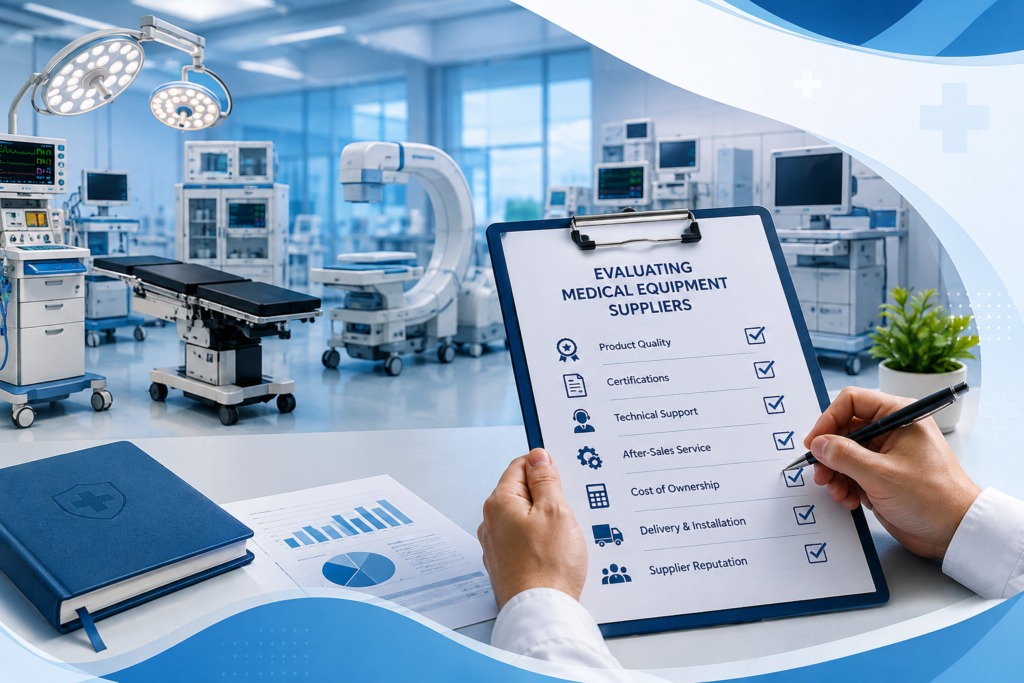
Choosing the right medical equipment supplier is an important decision for hospitals, clinics, diagnostic centres, laboratories, and healthcare organizations. The supplier you choose can directly affect equipment quality, operational efficiency, maintenance costs, and long-term patient care.
With many medical equipment suppliers in UAE offering different brands, product ranges, prices, and service packages, healthcare organizations need to look beyond the initial quotation. A reliable supplier should be able to provide suitable equipment, technical information, dependable delivery, and ongoing support.
Whether you are purchasing equipment for a new healthcare facility or upgrading an existing hospital or clinic, the following factors can help you evaluate suppliers before making a purchase.
1. Check the Supplier’s Product Range
Start by reviewing the supplier’s product portfolio. A supplier with a broad range of medical and hospital equipment can make procurement easier, especially when a healthcare project requires multiple categories of equipment.
Depending on your facility’s requirements, you may need equipment for:
- Intensive care units
- Radiology and medical imaging
- Laboratory and diagnostics
- Dental care
- Gynaecology and obstetrics
- Dialysis
- Operation theatres
- Emergency and trauma care
- Physiotherapy and rehabilitation
- ENT departments
- Respiratory care
- Hospital furniture
A supplier that can support multiple departments may also help streamline procurement and coordination.
Medigate offers a wide range of specialized medical equipment, including ICU, radiology and imaging, laboratory, dental, dialysis, gynaecology, operation theatre, physiotherapy, and other healthcare equipment categories.
2. Evaluate Product Quality and Reliability
Medical equipment is expected to perform consistently in demanding clinical environments. Therefore, product quality should be one of the first factors you evaluate.
Before purchasing, ask the supplier about:
- Product specifications
- Intended clinical applications
- Manufacturer information
- Expected operating life
- Maintenance requirements
- Replacement parts
- Warranty coverage
- Availability of technical documentation
Do not select equipment based solely on the lowest price. A cheaper product may result in higher maintenance costs or operational difficulties over its lifetime.
The objective should be to find equipment that provides the right balance of quality, reliability, usability, and overall value.
3. Verify Manufacturer and Brand Information
The manufacturer behind the equipment is another important consideration.
Ask potential medical equipment suppliers about the brands they distribute and whether they can provide appropriate product documentation.
A good supplier should be transparent about:
- Manufacturer details
- Model numbers
- Technical specifications
- Product certifications
- Warranty terms
- Accessories and compatible components
- Availability of spare parts
This information allows procurement teams and healthcare professionals to compare products more accurately.
4. Check Certifications and Regulatory Documentation
Medical devices are subject to regulatory and quality requirements. Depending on the equipment and destination market, different certifications and documentation may be required.
Before placing an order, ask the supplier to provide relevant documentation for the equipment being considered.
This may include:
- Product certificates
- Manufacturer documentation
- Technical specifications
- Quality documentation
- Warranty information
- User manuals
- Installation requirements
For international projects, documentation becomes particularly important because equipment may need to satisfy the requirements of the destination country.
5. Assess Technical Support and After-Sales Service
Buying medical equipment is not the end of the procurement process.
Healthcare facilities depend on equipment functioning properly after installation. Therefore, technical support and after-sales service should be considered when comparing medical equipment suppliers in Dubai and across the UAE.
Ask the supplier:
- Is installation support available?
- Is product training provided?
- Who handles technical issues?
- Are spare parts available?
- What is the warranty period?
- Is maintenance support available?
- How quickly can service requests be handled?
A supplier that offers reliable after-sales support can help reduce equipment downtime and improve the long-term value of your investment.
6. Compare the Total Cost of Ownership
Price is important, but the purchase price alone does not tell you the actual cost of medical equipment.
When comparing quotations, consider the total cost of ownership.
This can include:
Initial purchase price + installation + training + maintenance + consumables + spare parts + servicing + transportation
For example, two machines may have similar purchase prices but significantly different maintenance requirements. Looking at the complete cost over the equipment’s expected operating life can help healthcare organizations make better purchasing decisions.
7. Evaluate Delivery and Logistics Capabilities
Delivery is especially important when purchasing equipment for a new hospital, clinic, laboratory, or healthcare project with a fixed opening or installation schedule.
Ask the supplier about:
- Expected delivery timelines
- Shipping options
- Packaging
- Insurance
- Customs documentation
- Installation arrangements
- Delivery tracking
- International shipping capabilities
This becomes even more important when equipment is being supplied internationally.
Medigate operates from Dubai and supports healthcare equipment supply across the UAE as well as exports to African markets, helping hospitals, clinics, NGOs, and distributors source equipment for healthcare projects.
8. Check the Supplier’s Experience
Experience can be a valuable indicator when evaluating a medical equipment supplier.
Look for suppliers with experience working with healthcare facilities similar to yours. Their experience may include hospitals, private clinics, diagnostic centres, laboratories, government healthcare projects, NGOs, or medical distributors.
You can also ask about:
- Previous projects
- Healthcare sectors served
- Countries supplied
- Product categories handled
- References or customer feedback
Medigate Medical Equipment Trading LLC has operated in the UAE since 2015 and supplies healthcare equipment to customers across the UAE and African markets.
9. Ask for a Detailed Quotation
A professional quotation should provide enough information for you to compare suppliers accurately.
Ideally, the quotation should clearly identify:
- Product name
- Manufacturer
- Model number
- Quantity
- Technical specifications
- Accessories included
- Warranty
- Delivery terms
- Installation costs
- Training costs
- Taxes or other applicable charges
- Payment terms
Avoid comparing suppliers based on a single final price without checking what is actually included in each quotation.
10. Consider Scalability for Future Requirements
Healthcare facilities often expand over time. A clinic may add departments, a laboratory may increase testing capacity, or a hospital may expand its ICU or diagnostic services.
When selecting a supplier, consider whether they can support your future requirements.
A supplier with a broad product portfolio can potentially help with future equipment upgrades, additional units, replacement equipment, and expansion projects.
11. Look at Customer Support and Communication
Good communication can make the procurement process significantly easier.
Your supplier should be able to answer technical and commercial questions clearly and provide relevant documentation when requested.
Pay attention to how quickly the supplier responds to enquiries and whether they understand your actual requirements instead of simply recommending products.
A strong supplier relationship should involve consultation rather than simply selling a product.
12. Compare Suppliers Based on Value, Not Just Price
One of the most common mistakes in medical equipment procurement is choosing a supplier solely because they offer the lowest quotation.
Instead, compare suppliers across multiple factors:
| Evaluation Factor | What to Check |
| Product Quality | Reliability, specifications and manufacturer |
| Certifications | Relevant product and quality documentation |
| Price | Competitive purchase price |
| Warranty | Coverage and duration |
| Technical Support | Installation, servicing and troubleshooting |
| Spare Parts | Availability and accessibility |
| Delivery | Timeline and logistics capability |
| Training | User and technical training |
| Experience | Healthcare projects and market experience |
| After-Sales Service | Maintenance and support |
| International Supply | Export and customs capabilities |
This approach provides a more realistic picture of the supplier’s overall value.
Why Choosing the Right Medical Equipment Supplier Matters
Medical equipment is a long-term investment. The supplier you select can influence not only the initial procurement process but also equipment availability, maintenance, service, and future expansion.
For hospitals and healthcare organizations, the ideal supplier should combine quality products, competitive pricing, technical knowledge, reliable logistics, and dependable after-sales support.
This is particularly important for facilities purchasing multiple categories of equipment. Working with a supplier capable of supporting different departments can simplify procurement and create a more consistent supply relationship.
Choose a Reliable Medical Equipment Supplier in UAE
Medigate is a UAE-based medical equipment supplier and distributor serving hospitals, clinics, healthcare facilities, NGOs, and distributors. The company provides equipment across categories including laboratory and diagnostics, radiology and imaging, ICU, dental, dialysis, gynaecology, operation theatre, and other specialized healthcare equipment.
For healthcare organizations evaluating equipment suppliers, Medigate can support product selection, equipment sourcing, quotations, and supply requirements across the UAE and international markets.
Looking for the right medical equipment for your healthcare facility? Contact Medigate to discuss your requirements and request a quotation.