
Medical Equipment Maintenance: Why After-Sales Support Matters for Hospitals
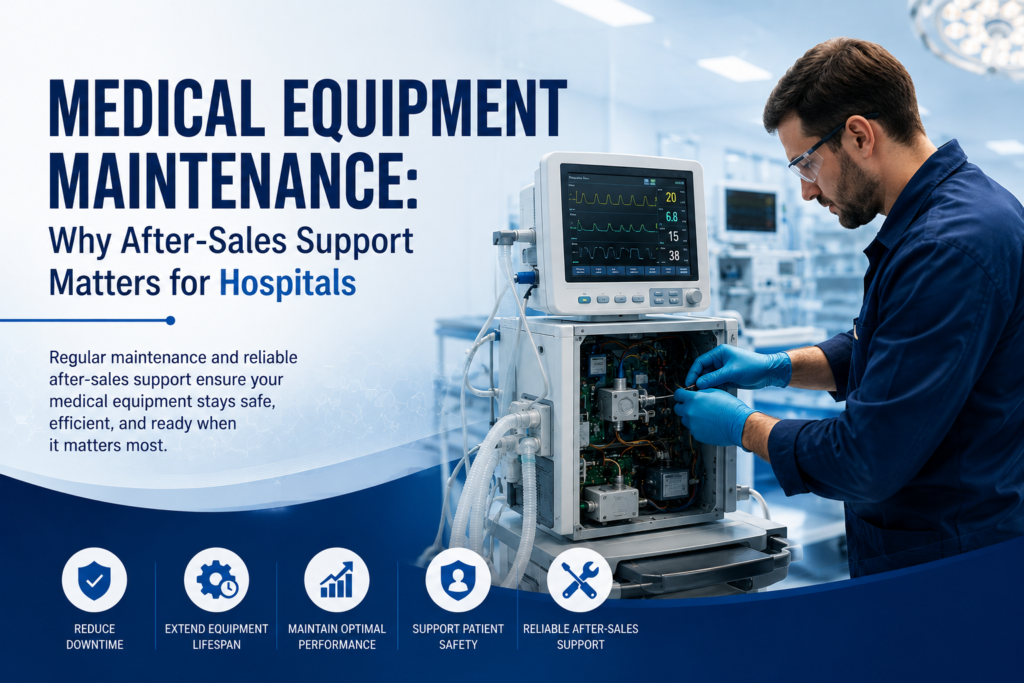
Medical equipment is a major investment for hospitals, clinics, laboratories, and other healthcare facilities. From ICU ventilators and patient monitors to radiology, laboratory, dental, dialysis, and operation theatre equipment, healthcare providers depend on these systems for daily clinical operations.
However, purchasing quality equipment is only the beginning. Regular maintenance and reliable after-sales support are equally important for keeping medical equipment safe, functional, and available when healthcare professionals need it.
This is why after-sales service should be an important factor when choosing medical equipment suppliers in Dubai and across the UAE.
What Is Medical Equipment After-Sales Support?
After-sales support refers to the services provided by a medical equipment supplier after the equipment has been purchased and delivered.
Depending on the equipment and supplier, these services may include:
- Equipment installation
- Commissioning and setup
- User training
- Technical assistance
- Preventive maintenance
- Troubleshooting
- Repairs
- Spare-parts support
- Warranty services
- Equipment inspections
- Product upgrades and replacements
A supplier that continues to support healthcare facilities after the sale can provide significantly more value than a supplier that only delivers the equipment.
Why Is Medical Equipment Maintenance Important?
Medical equipment is used regularly and often operates in demanding clinical environments. Without proper maintenance, equipment can experience performance issues, unexpected failures, or increased downtime.
Regular maintenance can help healthcare facilities:
Reduce Unexpected Equipment Downtime
Unexpected equipment failure can disrupt hospital operations. In departments such as intensive care, radiology, dialysis, and emergency care, equipment availability can be particularly important.
Preventive maintenance helps identify potential problems before they become major failures.
Extend Equipment Lifespan
Medical equipment represents a significant financial investment. Proper maintenance can help protect that investment and potentially extend the useful operating life of equipment.
Following manufacturer recommendations for servicing, calibration, inspections, and replacement of components can help equipment continue operating effectively.
Maintain Equipment Performance
Medical equipment needs to perform according to its intended specifications.
Regular servicing and technical checks can help identify issues that may affect equipment performance. This is particularly relevant for diagnostic and monitoring equipment where consistent performance is essential.
Support Patient Safety
Equipment used in healthcare directly contributes to patient care. Equipment that is poorly maintained or improperly serviced may create operational and safety risks.
Working with qualified technical professionals and following appropriate maintenance procedures can help healthcare facilities maintain safer equipment environments.
Preventive Maintenance vs Corrective Maintenance
Medical equipment maintenance generally involves two approaches: preventive maintenance and corrective maintenance.
Preventive Maintenance
Preventive maintenance is performed at planned intervals to identify and address potential problems before equipment fails.
It may include:
- Routine inspections
- Cleaning
- Calibration checks
- Component inspections
- Software updates
- Replacement of wear components
- Performance testing
The exact maintenance schedule depends on the type of equipment, manufacturer recommendations, usage, and healthcare facility requirements.
Corrective Maintenance
Corrective maintenance takes place when equipment develops a fault or stops operating correctly.
It can involve:
- Diagnosing the problem
- Replacing faulty components
- Repairing equipment
- Testing after repair
- Returning equipment to service
A strong after-sales support system can help reduce the time required to diagnose and resolve these issues.
What Should Hospitals Look for in an After-Sales Service?
When comparing medical equipment companies in Dubai, healthcare organizations should evaluate more than product prices.
Here are some important questions to ask suppliers.
1. Is Installation Support Available?
Some medical equipment requires professional installation, configuration, testing, or commissioning.
Ask whether installation is included in the quotation or available as a separate service.
2. Does the Supplier Provide User Training?
Healthcare staff need to understand how to operate equipment correctly.
Ask whether the supplier provides:
- Product demonstrations
- Operator training
- Technical guidance
- User manuals
- Basic troubleshooting instructions
Proper training can help staff use equipment more effectively and avoid preventable operational issues.
3. What Does the Warranty Cover?
Before purchasing, carefully review the warranty conditions.
Check:
- Warranty duration
- Components covered
- Labour coverage
- Replacement-part coverage
- Service response process
- Warranty exclusions
Understanding these conditions in advance can prevent unexpected costs later.
4. Are Spare Parts Available?
Availability of spare parts can have a direct impact on repair times.
Ask the supplier about the availability and sourcing of important replacement components and consumables for the equipment you are purchasing.
5. How Quickly Can Technical Support Respond?
Equipment downtime can affect healthcare operations.
Therefore, ask potential suppliers about their technical support process, communication channels, and expected response times.
A supplier with a clear support process can make equipment-related issues easier to manage.
After-Sales Support for Different Types of Medical Equipment
Maintenance requirements vary considerably depending on the equipment category.
ICU Equipment
ICU equipment can include ventilators, patient monitors, infusion systems, and other critical-care devices.
Regular inspections and technical support can help healthcare facilities maintain equipment readiness and reduce avoidable downtime.
Radiology and Imaging Equipment
Imaging systems require appropriate installation, operation, servicing, and technical support.
Maintenance can help healthcare facilities maintain consistent equipment performance and minimize interruptions to diagnostic services.
Laboratory Equipment
Laboratory systems may require routine calibration, servicing, software support, and replacement components depending on the equipment.
Reliable technical assistance can help laboratories maintain operational continuity.
Dialysis Equipment
Dialysis equipment requires careful maintenance and servicing because it is directly involved in patient treatment.
Healthcare facilities should consider technical support, preventive maintenance, spare parts, and service availability when selecting dialysis equipment suppliers.
Dental Equipment
Dental chairs, imaging systems, sterilization equipment, and other clinical devices can require regular inspection and servicing.
A supplier that provides ongoing technical assistance can help dental clinics maintain equipment availability.
Operation Theatre Equipment
Operation theatre equipment must be reliable and properly maintained to support surgical procedures.
Hospitals should consider installation, servicing, technical support, and spare-parts availability when purchasing equipment for operating rooms.
The Hidden Cost of Poor After-Sales Support
A low equipment purchase price may appear attractive initially, but poor after-sales support can create additional costs.
These may include:
- Longer equipment downtime
- Delayed clinical procedures
- Higher repair costs
- Difficulty sourcing spare parts
- Additional service charges
- Staff productivity losses
- Premature equipment replacement
For this reason, healthcare organizations should consider total value rather than purchase price alone when comparing medical equipment suppliers.
How to Evaluate a Supplier’s After-Sales Service
Before choosing a supplier, ask for clear information about its support capabilities.
A useful evaluation checklist includes:
| Factor | What to Ask |
| Installation | Is professional installation available? |
| Training | Is operator training provided? |
| Warranty | What components and services are covered? |
| Maintenance | Are preventive maintenance services available? |
| Repairs | How are technical issues handled? |
| Spare Parts | Are replacement components available? |
| Response Time | How quickly does technical support respond? |
| Documentation | Are manuals and technical documents provided? |
| Product Support | Can the supplier support the equipment long term? |
| International Support | Can the supplier support equipment supplied outside the UAE? |
Comparing these factors alongside product quality and pricing can help hospitals make more informed procurement decisions.
Why After-Sales Support Should Be Considered Before Purchase
It may seem logical to evaluate after-sales service only after buying equipment. However, it should actually be part of the initial purchasing decision.
When requesting quotations, healthcare organizations should ask suppliers to clearly explain:
- Warranty terms
- Installation
- Training
- Preventive maintenance
- Technical support
- Spare-parts availability
- Repair procedures
- Service agreements
Including these requirements in the procurement process makes it easier to compare suppliers on a like-for-like basis.
Choosing Medical Equipment Companies in Dubai
Dubai is an important regional hub for healthcare equipment sourcing and distribution. Healthcare facilities can access suppliers offering equipment across numerous medical specialties.
However, choosing the right supplier requires more than comparing product catalogues.
A dependable supplier should be able to combine quality medical equipment, technical expertise, efficient delivery, product knowledge, and ongoing after-sales support.
For hospitals and clinics planning equipment purchases, establishing a long-term relationship with a reliable supplier can make future maintenance, upgrades, replacements, and additional procurement much easier.
Medigate: Medical Equipment Supply and Support in the UAE
Medigate Medical Equipment Trading LLC supplies medical and healthcare equipment across a wide range of categories, including ICU, radiology and imaging, laboratory and diagnostics, dental, dialysis, gynaecology, operation theatre, physiotherapy, and other healthcare requirements.
Based in the UAE, Medigate also supports healthcare equipment supply to international markets, including African countries.
When evaluating medical equipment suppliers in Dubai, healthcare organizations should consider not only the equipment being purchased but also the support available throughout its operating life.
The right supplier can help healthcare facilities make better equipment investments, minimize avoidable downtime, and maintain reliable healthcare operations.
Conclusion
Medical equipment maintenance is an essential part of healthcare facility management. Even high-quality equipment requires appropriate installation, operation, inspection, servicing, and technical support.
For this reason, after-sales service should be a key consideration when selecting medical equipment suppliers in UAE.
By evaluating warranty coverage, technical support, maintenance services, spare-parts availability, training, and supplier experience before purchasing, hospitals and clinics can make more informed decisions and protect their equipment investments over the long term.
If you are sourcing medical equipment for a hospital, clinic, laboratory, or healthcare project, choosing a supplier that can support you beyond the initial sale can make a significant difference.